
Increased productivity in forestry operations
Understanding productivity in modern forestry
It takes more than logs to measure productivity in our era’s forests. It means considering quantifiable, hands-on productivity, such as acres logged per year in a forest. The two headline figures are yield per hectare, that is, how much wood or biomass comes from each square meter or hectare, and cost per cubic meter, which indicates how much it costs to extract each unit of wood from the forest. Others even record how many worker hours are invested per unit or liters of fuel or equipment used per ton of wood. These figures assist forest administrators in identifying inefficiencies and excessive expenses. They aid in contrasting the productivity of one forest with another, regardless of their global location or tree species.
Integrating technology for operational efficiency
Digital efficiency
Digital tools can assist forestry operators in getting more work done, making fewer errors, and consuming less money and fuel. Remote sensing and GIS allow you to see what is in the forest before sending people out to verify it.
Mechanized harvesting
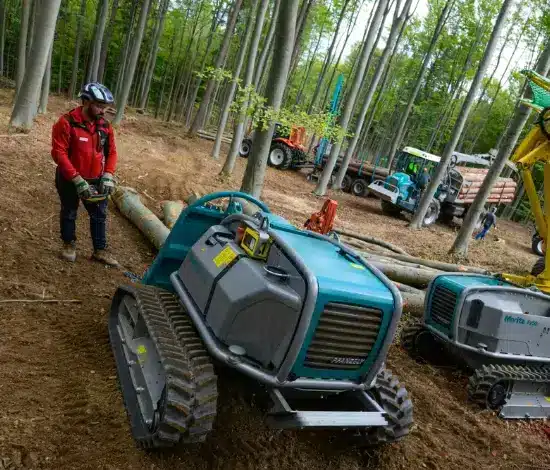
High-tech harvesting machines are a giant leap beyond the old pick-and-shovel methods. Harvesters and forwarders can fell, delimb, and load logs in a single operation. A few models even employ sensors to selectively harvest certain trees while sparing others, assisting in maintaining a robust forest ecosystem.
Real-time tracking
Digital management platforms allow teams to track each step, from cutting to shipping. These tools reveal where every team is, what every machine is doing, and how much wood has been moved—all in real time. Dispatchers can identify slowdowns and dispatch assistance before they back up.
Workforce development and continuous training
Workforce development and ongoing training are the spine of a productive forest industry. Smart training ensures workers understand how to make use of new tools and take safety precautions, helping both efficiency and safety go hand in hand. The forestry industry, like any other, requires workers who are trained in current technology and processes. This is the case for newcomers as well as veterans. By staying ahead on skills, companies satisfy demand and keep the business running secure and smooth.
Workforce development and ongoing training is crucial. It provides workers practical time with new equipment and educates them on how to operate safely. For instance, conducting mini workshops on how to use harvesters assists workers in learning through hands-on experience, not just reading.
Sustainable practices for long-term yield
Sustainable forestry is about much more than just felling trees for a fast profit. It’s about sustaining forests for the future while satisfying current demand. This requires intelligent management, precise techniques, and a consideration of the entire system’s well-being.
Selective logging and reforestation keep forests healthy. Rather than clear-cutting a single stand, selective logging involves harvesting a limited number of trees at a time. This allows younger trees and other plants to continue growing, which keeps the forest floor cloaked in growth. It keeps the soil in place, so there’s less erosion. Take, for instance, certain forestry teams who label mature trees for harvesting and allow young ones to thrive for future seasons. Immediately after logging, we have reforestation. This means that you are planting new trees to replace those that you took down.
Boost your forestry productivity today
Contact us for expert solutions that enhance efficiency, sustainability, and profitability in all your forestry operations.