
Precision thinning for sustainable forest management
Thinning with precision is a cornerstone of sustainable forestry, sculpting how forests develop and thrive through the years. Thinning, when done with care, preserves just the right amount and species of trees, ensuring that the forest continues to provide timber, sustain wildlife, and protect soil and water over the long term. It varies widely how thinning is conducted, with crews able to work with great precision and come close to hitting the optimum tree density. Even expert teams can miss target figures, particularly in denser sections.
Methods and technologies for accurate thinning
Advanced stand thinning in forestry is all about the perfect combination of methods and innovations. These tools assist foresters in selecting trees to remove, managing thinning intensity, and monitoring progress, all with reduced bias and error. Precise thinning with intelligent tools.
In fact, machine learning tools are now impacting how thinning patterns are selected. They rely on extensive forest data to identify optimal trees for removal using predefined criteria or characteristics, such as diameter or crown size. These algorithms can construct models mimicking the behavior of professional foresters, such as recursive methods that select trees from specific diameter classes until a desired thinning intensity is reached.
Data-driven decision making in thinning operations
Data-driven decisions
Data-driven decision making is now a cornerstone in thinning operations, helping foresters fine-tune schedules and pick the right thinning intensity. Forest inventory data, including tree diameter, stems per hectare and growth, provide a good foundation for planning.
Practical heuristics
A heuristic, like ‘rules of thumb’, assists when data is absent or incomplete. Such rules, frequently derived from experience, help account for why a forester might select some trees to remove or to leave behind.
Predictive modeling
Thinning models are crucial. These tools employ data such as DBH, stand density, and even crown overlap to mold plans and select strategies. They help you understand how a given thinning—light, moderate, or heavy—impacts a stand today and decades from now.
Achieving optimal forest density and structure
Optimal forest density and structure keep forests healthy, productive, and resilient to stress. The correct density allows beneficial light to reach the lower layers, promotes the development of selected tree species, and maintains species diversity. Having the right structure means fewer pests and less risk from wind or fire while allowing forests to absorb more carbon. Managers commonly employ thinning to fell a number of trees and attain optimal stand density.
Balancing light and nutrient competition needs a close look at both tree spacing and what each species can take. Too many trees mean less light and more competition for water and food, so trees grow slowly and may get weak. If thinning is too heavy, young trees might get sunburned or lose shape, and weeds can take over the gaps. Good thinning results in bigger, healthy crowns and helps keep the best-growing trees in the right light.
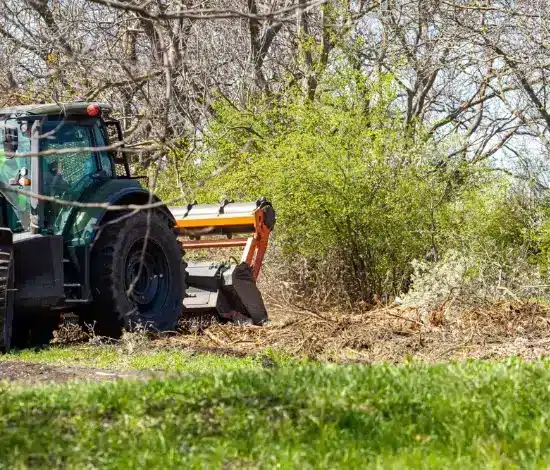
Optimize your forest thinning operations
Contact us for precision equipment and expert guidance to achieve sustainable density and maximize long-term forest health.