
Understanding ROI and its significance for harvesting head investments
ROI stands for Return on Investment, and it’s a quick test to see if you’re getting your money’s worth. It indicates how much return or benefit resulted from an expenditure, relative to the amount, and is expressed as a percentage. For a harvesting head, ROI helps keep tabs on whether purchasing one yields enough in returns to pay for itself and more. The basic formula is clear: ROI equals net income divided by total cost, then multiplied by 100. If a new harvesting head costs €50,000 and delivers €15,000 more net income in a year, the ROI for that year is 15,000 divided by 50,000 multiplied by 100, or 30%. So if you spend a euro, you get back 30 cents.
ROI is highlights because it’s user-friendly and it applies to all kinds of capex, not just harvesting heads. When viewing new gear—perhaps a harvesting head, chainsaw, or grapple—the ROI indicates which provides the most for the dollar. A harvesting head has an ROI of 40% and a new loader has 25%. The harvesting head seems the smarter buy. This way, businesses can put all options side-by-side and determine which one leverages the budget most effectively. It prevents expensive errors, such as selecting something that plays well on paper but doesn’t deliver in practice.
ROI doesn’t give a crap about time. Time does matter in real life. It’s very different to get a 60% ROI in one year than over five years. That’s why it’s helpful to measure it over a specific period of time, like annual ROI, to determine which investment actually grows more quickly. These provide a clearer picture and assist in reasonable apples-to-apples comparisons. A regular time frame also aids long-term planning, as it’s easier to understand how each machine or tool contributes to value creation over time. Annual ROI for a harvesting head, for instance, can indicate whether returns are consistent, increasing, or decreasing, allowing you to plan repairs, upgrades, or replacements.
ROI is a reasonable measure by which to judge its performance, but it is not very good. It doesn’t indicate the risk associated with each investment. Two tools might have the same 50% ROI, but one might break more often or require more maintenance, which introduces hidden costs. It doesn’t display things like downtime or work lost from a breakdown. While ROI is a wonderful initial screen, it should be applied alongside other tests, such as risk or maintenance cost, to get the complete image.
Calculating ROI for a harvesting head: simple formula and step-by-step guide
Calculating ROI for a harvesting head involves measuring both your expenses and your benefits from it. The basic concept is to determine whether the harvesting head makes financial sense by comparing the profit it generates with the cost to own and operate. While this process uses a simple formula, it is helpful to break it up into clear steps and use tables or lists to keep it simple.
The basic ROI formula is: ROI equals net profit divided by cost of investment multiplied by 100.
Net profit is what you make, which is all the revenue from the harvesting head, less what you spend, which is all costs associated with buying and operating the head. That’s what it is telling you: the percentage of your return on your investment.
To calculate ROI for a harvesting head, follow these steps:
- Note your total initial investment, including purchase and installation costs, as well as maintenance and operating costs such as fuel, labor, and repairs.
- Enumerate all the revenue that the harvesting head produces. This could be more wood, increased efficiency, or savings from reduced downtime.
- To find net profit, subtract total costs from total revenue.
- Divide net profit by total investment cost.
- × 100 to find ROI percent.
- Compare your ROI to industry standards. A nice ROI is generally in the 5% to 12% range. Anything beyond 12% is excellent, while a 5 to 1 return ratio is strong and a 10 to 1 return ratio is exceptional.
Lining up your numbers in a table really clarifies the process. For example:
| Item | Amount (EUR) |
| Investment Cost | 50,000 |
| Annual Revenue | 60,000 |
| Annual Costs | 10,000 |
| Net Profit | 50,000 |
| ROI (%) | 100 |
In this table, the net profit (revenue minus costs) is 50,000 EUR and your investment cost is 50,000 EUR, so the ROI equals (50,000 divided by 50,000) multiplied by 100, which equals 100 percent.
It’s important to note that simple ROI illustrates the fundamental return. There are other methods to verify value as time goes on. Net Present Value (NPV) and Internal Rate of Return (IRR) both incorporate the time element and are valuable for larger, long-term investments. NPV considers the value of those future profits in today’s money, while IRR calculates the rate of return that just breaks even. For most day-to-day situations, the simple ROI formula does just fine, particularly when you’re looking for a quick reality check.
Time is a factor as well. If you need results fast, a high ROI over ten years may still be worse than a slightly lower ROI over two. Always normalize your costs and gains to a time frame so you are comparing apples to apples.
Donaldson Brown developed the ROI formula in 1914, so it’s a time-honored method for monitoring business performance. All you really need to do is come up with two numbers: the investment and the gains from it. Use this easy check before buying, so you know if your harvesting head will pay dividends.
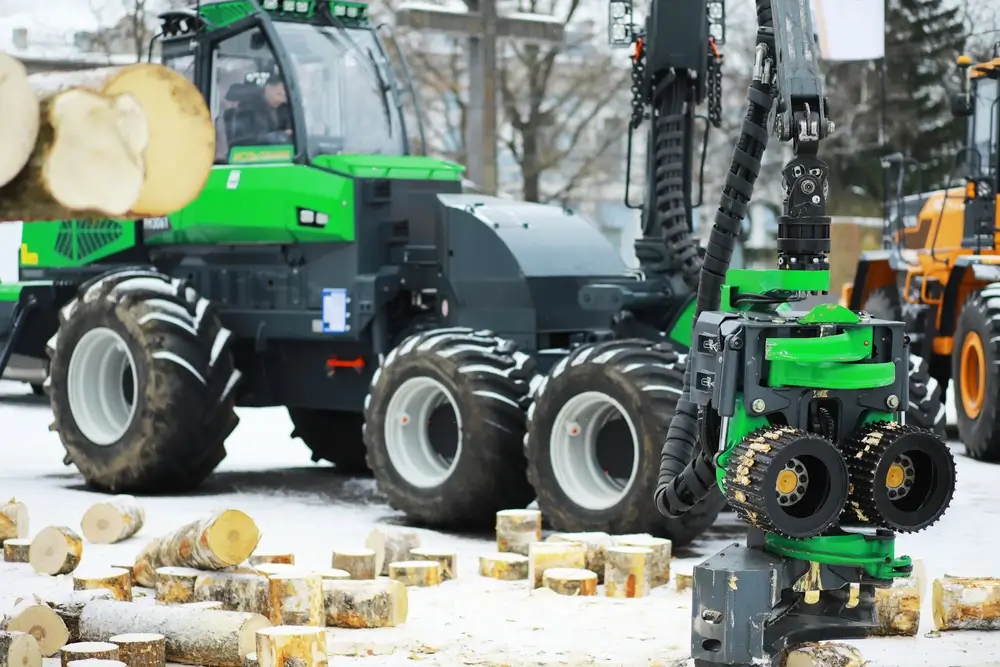
Identifying and estimating investment costs for harvesting heads
Before you can calculate a return on investment, you need to know what a harvesting head really costs. That is, considering all the money you have to spend pre and post purchase. For example, most people concentrate on the sticker price, but that’s only a piece. Costs can vary significantly depending on crop type, land size, machine specifications, and location of deployment. To be safe, it’s clever to dissect each and every cost and not miss anything.
- Purchase Price: The upfront price is usually the biggest cost. Brands, models, and features can make huge swings here. For instance, a fundamental head for small grains is generally less expensive than a high-capacity head for corn or sugarcane. They can range from €20,000 to over €100,000 based on your requirements and location.
- Installation Costs: It’s rare for a harvesting head to be ready to use out of the box. You might need custom mounts, additional hydraulics, or new controls. A few manufacturers cover rudimentary setup, but others bill for labor and additional components. That can add a couple of thousand euros on top.
- Initial Training: It’s easy to overlook training, but it matters. Safe and smart usage minimizes downtime and repair expenses. They all include a quick session, but actual hands-on training might cost more, particularly if you operate a large crew or require assistance in multiple languages.
- Delivery Fees: Shipping a large, heavy machine isn’t cheap. Distance, shipping method, and customs fees will all drive up costs. In some locations, delivery alone runs from a few hundred to a few thousand euros.
- Taxes and Duties: Taxes change by country and region. Import duty or VAT can really add a big chunk to the bill. This is simple to overlook, but it’s a legitimate cost you pay upfront.
- Financing Charges: If you don’t pay cash, add loan interest or lease fees. It varies by lender and your credit, but even a low rate will accumulate over the years.
- Support and Service Contracts: Some suppliers offer support packages or extended warranties. These can be fixed costs, but can include variable charges for call-outs or spare parts.
- Other Upfront Expenses: This covers things like insurance for the head, early spare parts, and extra tools. Each of these contributes to your actual investment.
To help not overlook anything, list each cost in a table or spreadsheet. Explore prices for each line, using quotes or old bills if you have them. Don’t forget inflation since prices can increase over the life of the machine. You’ll want to consider variable costs, such as fuel, labor and repairs. These are tough to estimate, but reviewing historical costs for the same or similar equipment can be incredibly helpful. Machine breakdowns, bad weather, or market changes are risks that can shift the figures quickly.
Evaluating operational expenses and revenue streams
For example, considering the ROI for a harvester head boils down to balancing what you pay per year against what you anticipate earning. Monitoring actual expenses, identifying sources of revenue, and making sure the difference leaves you with a robust profit is essential. To see things clearly, it helps to segment the process and adhere to a methodology when doing the math, so you know your figures are solid and reproducible.
Begin by enumerating what you pay for regularly. These are the expenses that continue to arise, regardless of whether your production fluctuates. Consider things such as repairs, regular servicing, the cost of spare parts, and your fuel consumption. Don’t overlook operator wages; these can accumulate, particularly if you operate large equipment for extended shifts. In certain areas, grain prices and the expected price for lumber or anything you glean will also adjust your operating budget. Uncertainty in these prices can swing your ROI up or down from year to year. Manufacturing costs and any applicable overhead should be included as well. Omitting them will distort your numbers.
Main recurring expenses and expected revenues can be listed as:
- Maintenance and repairs (parts, labor, routine checks)
- Fuel or power costs (diesel, electricity)
- Operator wages (salaries, benefits, training)
- Insurance and safety compliance
- Manufacturing and overhead costs (depreciation, storage)
- Fluctuating costs tied to commodity price changes
Revenue streams get generated from a couple of areas. If a new harvester head lets you work faster, you can cut more wood in less time, increasing your output for the day. This increased output can translate to larger deals or the opportunity to expand to new customers. Others will utilize the very same machinery for value-added services, such as processing various wood species or offering specialized cuts, which can boost your market prices.
- Income from increased productivity (higher daily or seasonal yield)
- Expanded services (new contracts, custom jobs)
- Premium rates for specialized work
- Possible savings from less downtime or fewer repairs
Once you have estimated your recurring costs and data on your revenue sources, calculate your projected yearly income versus expenses. This provides you an approximation of your actual margin. To check ROI, use the formula: ROI equals Net Profit from Equipment divided by Cost of Equipment multiplied by 100. For example, if your harvester head is €80,000 and it generates €24,000 in net profit after all costs in a year, then your ROI is €24,000 divided by €80,000 multiplied by 100 equals 30%. That is, you get back 30% of your investment annually. Income and expenses both fluctuate with market fluctuations and equipment degradation.
A rough back-of-the-envelope calculation like this helps you identify any large shifts in your business and see if the new head is really paying off. What’s key is recording these values over time, not just once. It allows you to identify trends, monitor the effects of pricing adjustments or repair spikes, and adjust your business plan. Because your operating costs and commodity prices can change, it’s wise to check your figures at least annually. Developing and adhering to a basic internal rule for how you collect and apply these figures keeps your ROI analysis transparent and genuine.