
Key factors shaping productivity in thinning operations
Thinning productivity with a harvester is influenced by a combination of operator competence, site conditions, machine maintenance, and work organization. Any one of these components can influence both your yield and the efficiency of the operation.
Operator skill and training make a big difference in harvesting efficiency. A skilled operator can identify the prime trees to fall, take swift actions, and prevent errors that bog down the task. Training teaches operators how to manipulate the controls, estimate tree size, and maintain machine safety on difficult terrain. Small errors waste missed cuts or extra machine wear. Experienced operators spend less time on superfluous tasks and optimize every minute of machine use. In real work, a highly skilled operator might accomplish 25 percent more every day than an inexperienced peer, even on the same model machine. Effective training reduces the risk of breakdowns because operators identify minor issues before they escalate.
Terrain complexity and stand density shape machine performance. Steep slopes, rough soils, and lots of rocks or brush slow down the harvester. The operator must drive slower and plan each move. Thick stands with many trees close together mean more starts and stops. This can slow down work but means you get more removals per hectare. When the forwarding distance is short, under 250 meters, stand density and the number of timber assortments become even more important. If the trees are spaced well and the ground is flat, machines can run faster and move more wood. Tree size matters too. Larger diameters, in the 1 to 28 cm range, make the job easier for the harvester. When trees get much bigger, it takes longer to process each one. The most wood per hour, around 50 cubic meters per productive machine hour, often happens when the average tree diameter is just above or below 50 cm. Still, this number changes with machine type and forwarding distance.
Maintenance schedules keep machines humming and reduce unexpected downtime. These periodic inspections can identify worn parts before they snap in the middle of the woods. Easy stuff like keeping oil clean and checking hydraulic lines accumulates. Dead time and downtime are dead productivity because the crew and machine sit idle. Adhering to such a maintenance schedule translates into more of the workday being dedicated to cutting and forwarding. The optimal use of machine hours is key, with utilization between 58% and 89%. A well-maintained machine has less surprise trouble and can operate more hours per week.
Productivity rates between manual thinning and mechanized harvesting show clear differences. Manual thinning uses hand tools and takes more time for each tree. Machines can cut, process, and move trees much faster, especially when bunk capacity is higher. For example, small forwarders with a 3 cubic meter bunk can move between 2 and 4.1 cubic meters per machine hour, while larger ones with about 12 cubic meter bunks can move up to 20 cubic meters per hour. Mechanized methods shine in small stands with two timber assortments and short forwarding distances. Manual work fits better where machines cannot go or where tree size is too small for harvesters to be worth it.
Machine harvester features that drive efficiency
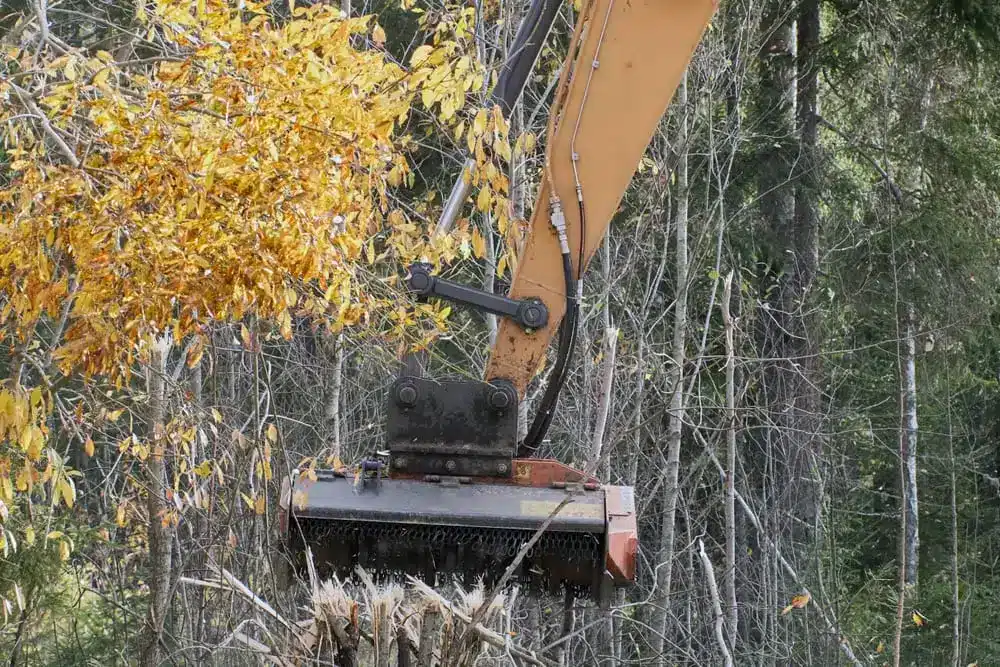
Machine harvesters play a significant role in thinning and crop harvesting across the globe. Their design integrates intelligent technology with practical needs, enabling operators to conserve effort and time during fieldwork. The secret to their productivity lies in a couple of core functionalities that synergize for increased efficiency.
Adjustable cutting heads are a standout as they allow machines to manage various tree sizes or crop varieties. In fields with mixed growth, a fixed head may bog down and lose a lot of crop. Adjustable heads shift height or width to conform to what’s in front of them. Less time stopping and making manual changes means more time working. For instance, in mixed forests with some trees significantly thicker than others, the operator can tailor the head with a button or lever. This allows the machine to cut cleanly and saves the engine stress. Farmers with variable crops, like a patchy wheat field, experience less missed stalks and cleaner cuts, resulting in a better harvest and less waste.
Ergonomic cabin design is more than a comfort bonus. Long shifts are standard in harvesting, and a badly designed cabin can wear out even the superstar operators. When the seat, controls, and visibility are all designed for human shape and motion, operators remain alert and error-free. Think cabins with air suspension seats, wide windows, and controls within easy reach. Climate control and noise dampening make it even better, reducing stress and fatigue. Across a 12-hour shift, these seemingly small changes really do add up, ensuring the operator can keep up with the pace without compromising their health or safety.
Things like engine power, reach, and maneuverability are the backbone of efficient harvesters. With an engine nearing 800 horsepower, a single day in the big fields can see it pulling broad headers, some measuring 18m wide, through thick crops. Long reach arms assist operators in reaching difficult-to-access areas without having to reposition the entire rig, reducing time spent on each pass. Maneuverability is key, particularly in oddly shaped or sloping fields. Leveling technology enables the machines to work along hillsides, as in the Palouse, keeping production high in areas where conventional harvesters would be hard pressed. Innovations like self-cleaning rotary screens keep the engine from overheating and downtime due to clogging.
Automated feed and processing systems give it a boost, allowing the harvester to operate with less stopping. The machine splits into four main parts: the intake, threshing and separation, cleaning, and grain handling systems. Threshing and separation systems reduce manual work by separating grain from straw and chaff as the crop moves through. Cleaning systems ensure that only top-quality grain goes on its way, and grain handling and storage systems quicken unloading. Certain harvesters chop straw and spread it on the field, primed for baling or soil tillage. Monitoring technology keeps tabs on crop yields and health, aiding farmers in making efficient decisions for next season. Wide headers enable more to be cut at once, and self-cleaning screens keep it all flowing without clogs.
Operational strategies for maximizing output
Making your harvester thinning go further is not just about being fast. It’s about clever scheduling, collaboration, and how the equipment holds up day in, day out. Simple steps can cause big gains if done correctly.
Plan thinning work within weather windows that work for the land and the machine. Wet soils or high fire risk can halt work in numerous areas, truncating the harvest season. By monitoring the weather and selecting optimal days, they can have teams work more weeks or even months per year. This provides additional daylight hours to strike harvest targets and fulfill contract goals, which is crucial in regions where an entire season can be wiped out by rain or drought. Logging in the 1980s and 1990s US South is a world apart. Smarter machines and smarter scheduling have accelerated the work and helped businesses capitalize on each secure day.
For operators’ sakes, rotate them to keep them sharp and reduce errors. When folks work overtime, mistakes increase and the equipment breaks. Good operators can maintain production, but alertness wanes if they’re fatigued. Swapping operators mid-shift or at scheduled times keeps each fresh and focused. Training is another significant component. Research found that fresh operators improve wildly in the first six to seven months, becoming good enough to meet daily quotas. Training on simulators is cost-effective too, saving 36 to 40 percent over just real machine time and bringing rookies up to speed ahead of the actual work.
Be operationally smart — arrange the work so that the machines aren’t idling and burning gas. Trace the harvester’s route through a stand. Stump piles should be located so the forwarder can pick them up without the harvester having to shuttle drive back and forth. This minimizes idle time and wear, allowing each machine to work without interfering with others. In the US Lake State of Wisconsin, more than 70% of the annual harvest is now done with CTL machines. These machines hum best when the site is optimized for flow. For the past 50 years, machine makers have been making CTL equipment faster and easier to operate, resulting in less downtime and more timber cut per day.
Develop your own daily pre-flight checklist. Prior to every shift, operators should inspect fluids, tracks, tires, saws and safety features. It’s a habit that helps you catch minor problems before they lead to meltdown. By addressing issues early, you’re ensuring the machines are ready when you need ‘em. Machine availability rates can rise over time from 84% initially to roughly 88%, indicating the benefits of effective maintenance. More machine time equals more production. Per hour, machine productivity can range from a low of 9 m·HMP to a high of 24 m·HMP before normalizing around 20 m·HMP in actual jobs.